

Blog
How to Play the Kalimba: A Beginner’s Guide to the 17-Key Thumb Piano
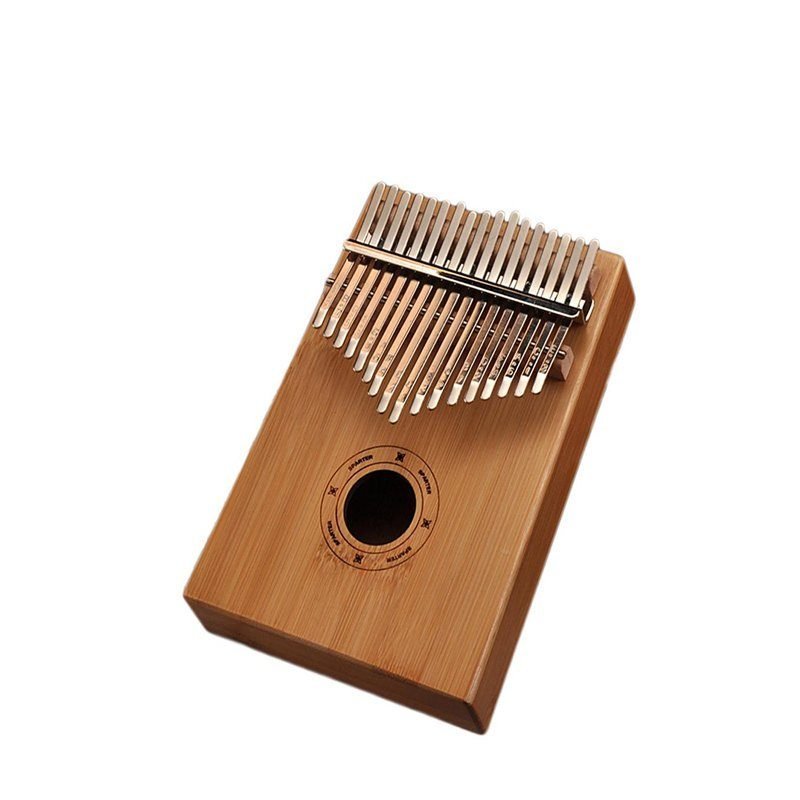
Quick answer: A kalimba is played by plucking its metal tines with your thumbs. On a standard 17-key kalimba tuned to C major, the longest tine in the middle is the lowest note (C), and the notes go up alternating left and right. Most beginners can play a simple song like “Twinkle, Twinkle, Little Star” within the first 15–30 minutes using number tabs.
What is a kalimba?
The kalimba is a modern version of the African mbira: metal tines fixed over a wooden soundboard. When you pluck a tine, the wood resonates and gives a soft, bell-like tone. It’s small, quiet enough for apartments and relaxing to play, which is why it’s become one of the most popular instruments for adult beginners.
Our 17-Key Kalimba Thumb Piano ($28.95) is pre-tuned, measures 18 × 13 × 3 cm, weighs about 0.5 kg and comes in pine, bamboo or mahogany finishes.
How the keys are laid out
Unlike a piano, notes don’t go left to right. They zig-zag from the center:
- The center tine (longest) is the lowest note, C (number 1).
- The next note up, D (2), is just to the left of center, E (3) just to the right, and so on, alternating sides.
- Higher octaves are shown in tabs with a dot above the number (e.g. 1̇ = high C).
Most kalimbas have the note letters or numbers engraved on the tines. If not, small stickers help a lot in the first week.
How to hold and pluck
- Hold the kalimba with both hands, fingers wrapped around the back, tines facing you.
- Pluck with the side of your thumb pad or thumbnail, pushing the tine down and off toward its tip.
- Pluck near the end of the tine for a clearer note, and use light pressure. Hard plucks buzz.
- Use your left thumb for left-side tines and your right thumb for right-side tines.
Reading kalimba tabs
Most free kalimba songs online use number notation: 1 = C, 2 = D, 3 = E, 4 = F, 5 = G, 6 = A, 7 = B. A dot above means one octave higher.
Your first song, “Twinkle, Twinkle, Little Star”:
1 1 5 5 6 6 5
4 4 3 3 2 2 1
5 5 4 4 3 3 2
5 5 4 4 3 3 2
1 1 5 5 6 6 5
4 4 3 3 2 2 1
Play it slowly at first. Speed comes after a few days.
A 7-day practice plan
| Day | Practice (10–15 min) |
|---|---|
| 1 | Find notes 1 to 1̇ and play the scale up and down. |
| 2 | Twinkle, Twinkle, Little Star. |
| 3 | Happy Birthday (useful for real life). |
| 4 | Thumb alternation drills: 1-3-5-3, 2-4-6-4. |
| 5 | Two notes at once (thirds: 1+3, 2+4). |
| 6 | Simple chords: C (1+3+5), F (4+6+1̇), G (5+7+2̇). |
| 7 | Pick any song you love and find its tab. |
How to tune a kalimba
A new kalimba can drift slightly in shipping. Use a free tuner app:
- Pluck a tine and read the note on the tuner.
- If it’s flat (too low), tap the tine toward the bridge (shorter = higher) with the small tuning hammer.
- If it’s sharp (too high), tap it away from the bridge (longer = lower).
- Make small taps and check after each one.
Care tips
- Wipe the tines with a dry cloth after playing to prevent rust.
- Keep it away from humidity and direct heat to protect the wood.
- Store it in a bag or box so the tines don’t get bent.
Frequently asked questions
Is the kalimba hard to learn?
No. It’s one of the easiest instruments to start: it’s pre-tuned, every note fits the C major scale, and you don’t need to read sheet music.
17 keys or 21 keys: which is better for beginners?
17 keys. It covers almost all beginner songs, is smaller and is easier to learn.
Do I need long nails to play?
No. You can pluck with the side of your thumb pad. Nails give a brighter sound, and finger picks are an option.
Is a kalimba a good gift for kids?
Yes, for children who can hold it comfortably (usually from school age). It’s a gentle introduction to melody and rhythm. More ideas in our gift guide under $30.
Ready to start? Get the 17-Key Kalimba or browse Electronics & Gadgets.